Quick answer
Chinese characters are built from 8 basic strokes: 横 héng (horizontal), 竖 shù (vertical), 撇 piě (left-falling), 捺 nà (right-falling), 点 diǎn (dot), 提 tí (rising), 钩 gōu (hook) and 折 zhé (turn). Every stroke you write is one of these shapes, or two of them joined without lifting the pen. Learn the eight, and any character becomes countable: 一 is one stroke, 十 is two, 人 is two, 口 is three, 国 is eight.
One thing to keep separate in your head: this page is about stroke types, not stroke sequence. Which stroke comes first is a different topic, covered in our Chinese stroke order rules guide.
What counts as one stroke
A stroke (笔画 bǐhuà) is one continuous movement of the pen from the moment it touches the paper until it lifts. If the pen reverses direction without lifting — a horizontal line that turns down into a vertical — that is still one stroke, not two. This single rule explains why 口 is three strokes and not four, and why 日 is four strokes rather than six.
Two consequences follow. First, stroke counts in dictionaries are not a count of line segments but a count of pen-down to pen-up movements. Second, the direction of travel matters: a horizontal line drawn right-to-left is not the same stroke as the standard left-to-right 横. Chinese strokes are directional, and handwriting input methods and school exams both expect the standard direction.
The 8 basic strokes
This is the list taught in Chinese primary school. Bookmark the table — it is the reference most learners actually want when they search for a Chinese strokes list.
| # | Stroke | Pinyin | English name | Shape | Example characters |
|---|---|---|---|---|---|
| 1 | 横 | héng | Horizontal | 一 | 一 (one), 二 (two), 王 (king) |
| 2 | 竖 | shù | Vertical | 丨 | 十 (ten), 中 (middle), 干 |
| 3 | 撇 | piě | Left-falling | 丿 | 人 (person), 八 (eight), 大 |
| 4 | 捺 | nà | Right-falling | ㇏ | 人 (person), 大 (big), 天 |
| 5 | 点 | diǎn | Dot | 丶 | 六 (six), 心 (heart), 小 |
| 6 | 提 | tí | Rising | ㇀ | 打 (hit), 地 (ground), 习 |
| 7 | 钩 | gōu | Hook | 亅 | 小 (small), 水 (water), 手 |
| 8 | 折 | zhé | Turn | 乛 | 口 (mouth), 日 (sun), 五 |
A note on the count, because you will meet two numbers. China's national stroke-classification standard sorts strokes into 5 basic classes — 横, 竖, 撇, 点, 折 — and files the rest underneath: 提 counts as a horizontal-type stroke, 捺 as a dot-type stroke, and 钩 as an attached hook inside the turning class. Schools and learner materials keep 8 names instead, because children have to name and write 捺, 提 and 钩 separately. Both frameworks describe the same strokes; the 8-stroke list is simply the more practical one for learning to write.
Each stroke in detail
横 héng — horizontal. Written left to right, very slightly rising, with a small press at the end. It is the most common stroke in Chinese. Keep it level and calm: 一, 二, 三 are pure horizontal practice.
竖 shù — vertical. Written top to bottom and dead straight. Two variants matter: the hanging needle 悬针竖 that tapers to a point (中, 十) and the dew drop 垂露竖 that ends with a slight press (下, 木).
撇 piě — left-falling. Sweeps down and to the left, thinning as it goes. Long 撇 (人, 大) versus short 撇 (千, 手) differ in length, not in direction.
捺 nà — right-falling. Sweeps down and to the right, thickening toward a firm, slightly flattened finish. It is the stroke that gives 人, 大, 天 and 水 their weight and balance — it is also the stroke beginners most often write too short.
点 diǎn — dot. A short, tapered press that has direction: a left dot leans down-left, a right dot leans down-right. Dots are small but structurally load-bearing — 心 is four dots and one curved stroke, and misplacing one dot changes the character.
提 tí — rising. A short stroke that starts low-left and flicks up-right, always ending thin. It usually appears at the bottom-left of a component to point into the next part, as in the 扌 of 打 and the 土 of 地.
钩 gōu — hook. A hook is never a stroke of its own: it is the small upturn attached to the end of a 竖, 横 or 折. 竖钩 in 小 and 水, 横钩 in 写, 弯钩 in 手 and 家. Draw the main stroke, then flick.
折 zhé — turn. A direction change made without lifting the pen, so it always contains a corner. 横折 in 口 and 日, 竖折 in 山 and 世, 撇折 in 女 and 云. The corner should be crisp — a rounded corner is what makes 口 look like a circle.
If you are interested in how these eight shapes behave inside one famous character, the Yongzi Bafa (永字八法) analysis walks through 永 stroke by stroke — it is the classic demonstration that one character can contain all eight stroke types.
Compound strokes built from the 8
Most real characters use compound strokes (复合笔画), which are simply two or more of the eight basics joined without lifting the pen. You do not need to memorize a long list — learn to decompose them:
- 横折 = 横 + 竖 (口, 日, 只) — the most frequent compound stroke in Chinese.
- 竖钩 = 竖 + 钩 (小, 水, 手).
- 横撇 = 横 + 撇 (又, 汉).
- 撇折 = 撇 + 折 (女, 云, 去).
- 横折钩 = 横 + 竖 + 钩 (月, 同, 门).
- 竖弯钩 = 竖 + 弯 + 钩 (四, 儿, 元).
This is why stroke counts surprise beginners: 口 has 3 strokes, but one of them is a compound; 月 has 4 strokes, one of which is a triple-part compound. Counting strokes in a character is really counting pen-down to pen-up movements, not visible line segments.
Strokes vs. stroke order
The distinction is worth internalizing early, because searches for the two get mixed up constantly:
- Strokes (笔画) = what shapes you write. The inventory of 8 basics plus their compounds. This page.
- Stroke order (笔顺) = in what sequence you write them. The rules — top to bottom, left to right, horizontal before vertical, and so on — are in our Chinese stroke order rules guide.
- Stroke count (笔画数) = how many pen-down movements the character has. Dictionaries and HSK word lists index characters by it.
When you meet a new character, the productive workflow is: count the strokes, name the type of each one, then check the order. Naming stroke types makes order rules much easier to apply, because "horizontal before vertical" or "left-falling before right-falling" only makes sense once you can identify 横, 竖, 撇 and 捺 on sight. A quick stroke order lookup shows you both at once — the sequence and the shape of every individual stroke — and covers over 20,000 characters for free. If you want a phone-based drill routine, our list of the best Chinese stroke order apps compares the options.
A short practice that works well: pick five characters you already know, and beside each one write the stroke names in order. 十 becomes 横 + 竖; 口 becomes 竖 + 横折 + 横; 小 becomes 竖钩 + 点 + 点. Doing this for a week makes both the stroke list and the order rules automatic.
Authoritative references
The stroke names and groupings on this page follow the conventions documented in China's national standards for stroke classification and the mainstream primary-school teaching list. For any individual character, a standard stroke order animation is the most reliable check of both the stroke types and their sequence.
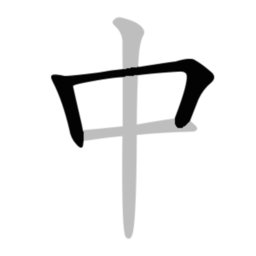
See every stroke of any character — free
Type any character on zhongwenbishun.com and watch it written stroke by stroke, with pinyin and audio. No signup, no limit. For guided writing practice with correctness checks, get the app.
FAQ
- How many basic strokes are there in Chinese?
- Eight, in the list taught at school: 横, 竖, 撇, 捺, 点, 提, 钩, 折. The national classification standard groups them into 5 basic classes (横, 竖, 撇, 点, 折), with 提 counted as horizontal-type, 捺 as dot-type and 钩 as an attached hook.
- What is the difference between a stroke and a stroke order rule?
- A stroke is one continuous pen movement — a horizontal line, a hook, a turn. Stroke order is the sequence those strokes are written in. This page lists stroke types; the sequence rules are in our Chinese stroke order rules guide.
- Do I need to memorize all the compound strokes?
- No. Compounds like 横折, 竖钩, 横撇 and 撇折 are just the 8 basics joined without lifting the pen. Learn the 8 shapes first and you will decompose compounds instead of memorizing them.
- What is the fastest way to check the strokes of a character I do not know?
- Watch a stroke order animation: type the character into a free online lookup and the animation draws every stroke in sequence, so you can count strokes and identify each type immediately.
- Why do some sources say 5 basic strokes and others say 8?
- They are two legitimate frameworks. The 5-class system groups shapes by direction for standards and dictionaries; the 8-stroke list splits out the shapes learners must name and write separately, such as 捺, 提 and 钩. Same strokes, different granularity.
New: check your handwriting with AI
Knowing the eight strokes is not the same as writing them well. The Chinese Stroke Order app closes that gap: you write each character yourself, and AI handwriting recognition grades every stroke against the standard. Details are on the AI Chinese handwriting check page and in our introduction post.
Related Reading
Chinese Stroke Order Rules (Complete Guide)
All seven core rules, the dot and enclosure patterns, and the exceptions worth knowing.
Read articleYongzi Bafa (永字八法): The Eight Principles in One Character
One character containing all eight stroke types — the classic way to see the stroke list in action.
Read articleChinese Stroke Order Lookup: Check Any Character Free Online
High-intent users usually want one thing: the correct way to write a character right now.
Read articleAI Chinese Handwriting Check: Verify Your Stroke Order
Write the character yourself and let AI grade every stroke — practice with feedback, not guesswork.
Read articleBest Chinese Stroke Order Apps (2026)
Which apps show stroke types clearly, and which actually make you write.
Read article