What does bishun mean?
Bishun (笔顺, bǐshùn) = Chinese stroke order. The first character 笔 (bǐ) means pen or stroke, and 顺 (shùn) means order or sequence, so the word literally describes the order in which the strokes of a character are written.
You will see the same idea written several ways in English: bishun, bǐshùn (with tone marks), or “Chinese stroke order”. They all point to the same standard: which stroke comes first, which direction it moves, and where the next stroke starts.
Bishun is not a separate system from stroke order. It is the Chinese name for it, and it is the term Chinese teachers, textbooks and parents use when they check that a character is being written correctly.
Why bishun matters when you write
Correct bishun supports three things at once: speed, structure and memory. When strokes follow a predictable order, the hand moves less, the character keeps its shape, and the movement is easier to repeat.
It also keeps handwriting readable. Characters written in the standard order tend to keep the correct proportions between components, while improvised order often squeezes or stretches the parts that should stay balanced.
For learners the practical benefit is memory: writing a character in the same order every time gives the brain a consistent motor pattern instead of a different one on each attempt.
Look up bishun for any character on this site
The fastest way to check bishun is to look at a standard animation instead of guessing. On zhongwenbishun.com you can search more than 20,000 commonly used characters, open the character page, and watch the bishun play stroke by stroke.
Each stroke is shown in order with its direction, so you can compare it directly with what your hand just did. The lookup is free in any browser, with no account and no install.
A bishun practice loop that works
Bishun practice is not about writing a character fifty times. It is a short loop you repeat for each new character, usually in a few minutes.
- Look up the character — search it here instead of relying on memory.
- Watch the animation once — note the first stroke, the direction of each turn, and the final closing stroke.
- Write it stroke by stroke — slow enough that the order stays correct, not just the final shape.
- Check your writing — compare the order with the animation, or use the AI handwriting check in the app.
- Review the characters you got wrong — keep a short list and revisit it a few days later.
Practice bishun in the app
The website is the quickest way to check a character. The app adds guided practice: you write each stroke yourself and the app checks the order as you go, so a wrong sequence is caught immediately instead of becoming a habit.
The app also includes pinyin, native pronunciation, textbook-based lessons and HSK 1-6 courses, which makes it easier to practice bishun in a structured order rather than character by character at random.
Keep learning
Once the definition is clear, the next step is the rules behind the order and a repeatable method for learning it.
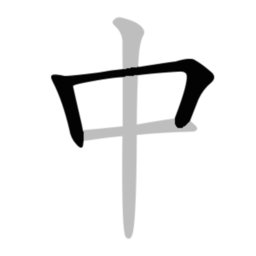
Knowing is not enough
An article can confirm the rule, but stable handwriting comes from checking the animation and practising the character in the app.
FAQ
- What does bishun mean?
- Bishun (笔顺, bǐshùn) = Chinese stroke order. 笔 (bǐ) means pen or stroke and 顺 (shùn) means order, so bishun is the standard sequence in which the strokes of a character are written.
- Is bishun the same as stroke order?
- Yes. Bishun is the Chinese name for stroke order; the two terms describe exactly the same standard.
- How do I practice bishun?
- Use a short loop: look the character up, watch the animation once, write it stroke by stroke, then check the order you actually wrote. Repeat for the characters you got wrong instead of drilling one character many times.
- Can I do write bishun practice online?
- Yes. “Write bishun practice” simply means practising writing characters in the correct stroke order. You can look up the animation free on this site, then practise in the app, where the stroke order you write is checked.
- Do I need to memorize every bishun rule?
- No. A small set of core rules covers most characters, and the rest is handled by checking the animation for characters that do not obviously fit the pattern.
Related Reading
Chinese Stroke Order Rules: How to Remember the Basics
Users often search for the rule before they search for the character.
Read articleChinese Stroke Order Lookup (Bishun Lookup): Check Any Character Free Online
High-intent users usually want one thing: the correct way to write a character right now.
Read articleCommon Chinese Stroke Order Mistakes and How to Fix Them
The real problem is often not one character, but one repeated mistake pattern.
Read articleHow to Learn Chinese Stroke Order (Step by Step)
Learning stroke order is not about memorizing rules — it is about a short check-and-practice loop you repeat for every new character.
Read article