The short answer
The fastest way to learn Chinese stroke order is to combine three things: a small set of core rules (top to bottom, left to right, horizontal before vertical), a reliable way to check each character with a standard animation, and guided writing practice where you write the strokes yourself. Rote memorization of rules alone rarely survives contact with real characters.
Learn the core rules first
A handful of rules — top to bottom, left to right, horizontal before vertical, left-falling before right-falling, outside before inside — covers the majority of common characters. Learning them first gives you a reasonable default for every new character you meet.
The rules are not a substitute for checking. Their real value is that they tell you when to doubt yourself: whenever a character does not obviously fit the pattern, that is your cue to look it up.
A step-by-step learning loop
Repeat this loop for every new character you learn. It takes only a few minutes per character, and it scales from a child learning basic characters to an adult reviewing for the HSK.
- Learn the core rules — top to bottom, left to right, horizontal before vertical, left-falling before right-falling, outside before inside — so you always have a reasonable first guess.
- Look up the character — search by character, word or pinyin instead of guessing from memory.
- Watch the stroke order animation — follow each stroke slowly and note where it starts and which direction it moves.
- Trace and write it yourself — practice in a guided mode that checks the order of every stroke, not just the final shape.
- Review with courses and lists — practice in a structured order using basic literacy, common character, textbook or HSK 1-6 courses.
- Re-check your mistakes — save the characters you got wrong and revisit them until the correct order feels automatic.
Common mistakes when learning stroke order
Treating rules as absolute is the first trap. Most characters follow the core patterns, but a minority have fixed individual orders that simply need to be checked.
The second trap is copying the finished shape instead of writing stroke by stroke. Tracing the final form looks productive but trains nothing; watching the animation and then writing in the correct order is what builds the habit.
Keep learning
These two guides go deeper on the rules themselves and on looking up individual characters.
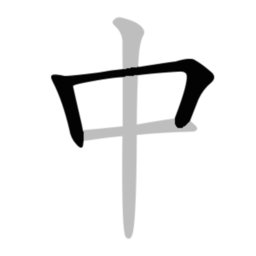
No te quedes solo con la respuesta
El artículo confirma la regla, pero la escritura estable se consigue viendo la animación y practicando el carácter en la app.
FAQ
- How long does it take to learn Chinese stroke order?
- The core rules can be learned in an afternoon. What takes longer is building the habit of checking exceptions, and a few minutes of practice per new character is usually enough.
- Should I memorize the rules before learning characters?
- Learn the basic rules first, but check each new character with a standard animation. Rules give you a good default, not a guarantee.
- Is stroke order important for the HSK?
- Yes. Correct stroke order supports handwriting speed, character structure and written exam tasks, and HSK vocabulary lists are a practical way to structure your practice.
Lecturas relacionadas
Reglas del orden de trazos en chino: las bases que conviene recordar
Muchos usuarios buscan primero la regla y solo después el carácter.
Leer artículoCómo comprobar el orden de trazos de un carácter chino
La necesidad real del usuario es simple: saber cómo escribir correctamente un carácter en ese momento.
Leer artículoErrores comunes en el orden de trazos en chino y cómo corregirlos
El problema real muchas veces no es un solo carácter, sino un patrón de error que se repite.
Leer artículoOrden de trazos de 永 (yong): por qué se consulta tanto este carácter
Yong es uno de los caracteres que más se consultan cuando se estudia el orden de trazos.
Leer artículo