What are Chinese radicals?
A Chinese radical (部首, bùshǒu) is a component that a dictionary uses to group and find characters. Many radicals also carry a meaning hint, which is why learners meet them early: 氵 usually points to water or liquid, 木 to wood or trees, and 口 to the mouth and mouth-related actions.
The radical is not a separate alphabet, and it is not always the whole meaning of a character. It is a reusable part with a classification job. For example, 河 (hé, river), 海 (hǎi, sea) and 洗 (xǐ, wash) all use 氵, but each character has its own pronunciation and meaning.
Traditional Chinese dictionaries commonly use the 214 Kangxi radicals as a reference set. Modern dictionaries and teaching lists sometimes group them differently, and beginners do not need to learn all 214 before writing. A small set of high-frequency radicals covers a large share of the characters you meet first.
Radicals show up in three everyday tasks: finding a character in a dictionary, recognizing unfamiliar characters, and keeping components the right size when you write. That last point is where stroke order practice helps.
Radicals vs strokes vs components
These three words describe different levels of a character, and mixing them up makes both dictionary lookup and handwriting harder.
A stroke (笔画, bǐhuà) is one continuous movement of the pen. 横 (héng, horizontal), 竖 (shù, vertical), 撇 (piě, left-falling), 捺 (nà, right-falling), 点 (diǎn, dot) and 提 (tí, rising) are basic stroke types. Stroke order is the sequence in which those strokes are written.
A component (部件, bùjiàn) is any reusable part of a character. It may carry meaning, sound, or both. In 清 (qīng, clear), 氵 is the meaning component and 青 (qīng) is the sound component.
A radical (部首, bùshǒu) is the component chosen for dictionary classification. In 清, the radical is 氵. The character has two components, but only one radical. A component can also change shape when it takes a position: 水 becomes 氵 on the left, 人 becomes 亻 on the left, and 火 can become 灬 at the bottom.
The practical difference is simple: strokes build components, components build characters, and the radical is the component a reference work uses to file the character.
How radicals help you write characters correctly
Radicals help most when you use them as structure cues, not just as vocabulary. Once you recognize the radical, you can predict where it sits and how much space it should take.
Left-side radicals are usually narrower than the right side: 氵 in 河, 亻 in 你, and 木 in 林. Bottom radicals are usually flatter: 灬 in 热. Enclosure components such as 囗 (a full frame, different from the mouth radical 口) set the outer frame, and the inside is written before the closing stroke.
The radical also gives you a natural unit for stroke order practice. Instead of memorizing a whole character blindly, you can learn the radical form, then learn how it connects to the rest of the character. The whole character still follows the general rules: top to bottom, left to right, horizontal before vertical, and outside before inside.
That said, the radical is not a magic key. The same component can have a different form, and some characters have historical or phonetic parts that do not match the modern meaning. When the shape or order is unclear, check a standard animation for that exact character.
If you are new to the rules, start with the core patterns and then verify individual characters. Rules give you a framework; the animation gives you the answer for the character in front of you.
Starter list: high-frequency radicals
The table below is a starting point, not a complete list. Each row gives the radical, its usual meaning hint, a few common characters, and what to watch when you practice the stroke order.
A few form changes are worth learning early because they appear constantly: 水 → 氵 on the left, 人 → 亻 on the left, and 火 → 灬 at the bottom. The standalone character and the radical form are written differently, so practice them as separate shapes.
永 (yǒng) is included as a practice character, not as a common meaning radical. It is traditionally used to demonstrate several basic stroke types, which makes it a useful warm-up before you combine radicals into full characters.
| Radical | Meaning hint | Example characters | What to practice |
|---|---|---|---|
| 氵 | water, liquid | 河 (hé, river), 海 (hǎi, sea), 洗 (xǐ, wash) | Write the three dots first, then the right component; compare with the standalone 水. |
| 水 | water (standalone character) | 水 (shuǐ, water) | Practice the standalone form separately; on the left it changes to 氵. |
| 火 | fire, heat | 火 (huǒ, fire), 灯 (dēng, lamp), 烧 (shāo, burn) | Four strokes; at the bottom it can appear as 灬. |
| 木 | wood, tree | 木 (mù, wood), 林 (lín, forest), 桌 (zhuō, table) | On the left, keep 木 narrow and write it before the right component. |
| 日 | sun, day | 日 (rì, sun), 明 (míng, bright), 时 (shí, time) | On the left, narrow the box; check the final closing stroke. |
| 口 | mouth, mouth-related actions | 口 (kǒu, mouth), 吃 (chī, eat), 喝 (hē, drink) | Three strokes; on the left it is small and narrow. |
| 人 | person | 人 (rén, person), 你 (nǐ, you), 他 (tā, he) | Two strokes, left-falling before right-falling; on the left it becomes 亻. |
| 永 | practice character, not a common meaning radical | 永 (yǒng, forever) | Use it to practice several basic stroke types; do not treat it as a meaning radical. |
How to practice radical stroke order online
You do not need an app to start. Open the free lookup on this site, type a character, and watch the animation stroke by stroke. The lookup page shows the character and plays the animation in order, so you can connect the shape you see with the part you are learning.
Use a short loop for each character. It is deliberately small: you are not trying to finish a radical list in one session, but to connect one radical to one character you can actually write.
If you want guided checking while you write, the optional app adds stroke-by-stroke feedback. The browser lookup remains a direct way to check a character before practice.
- Pick one character that contains the target radical, such as 河 for 氵 or 林 for 木.
- Look it up and watch the animation once without writing.
- Name the radical and the order of its strokes before you copy the whole character.
- Write the character from memory, then replay the animation and compare.
- Keep a short list of characters whose order surprised you and review them later.
Common mistakes when writing radical-based characters
Many radical mistakes are not about knowing the meaning. They are about shape, position and order.
- Writing the radical as if it were the standalone character. 氵 is not 水, and 亻 is not 人; the shortened forms have their own stroke shapes and spacing.
- Ignoring form changes. 水 becomes 氵 on the left, 人 becomes 亻, and 火 can become 灬 at the bottom. Learn the form you are actually writing.
- Making a left-side radical too wide. 氵, 亻 and 木 usually take less width than the right component; a wide radical squeezes the rest of the character.
- Assuming the radical always gives the exact meaning. 氵 in 汉 (hàn, Han/Chinese) does not mean the character is about water; the radical is a classification hint, not a definition.
- Mixing up the radical with every component. A character can have several components; only one is the dictionary radical. In 清, 氵 is the radical and 青 is a component.
- Writing the radical in isolation order instead of the whole character order. The position of the radical affects when it is written: left before right, outside before inside, but a bottom radical comes after the top. Check the whole character, not just the radical.
- Trying to memorize all 214 Kangxi radicals before writing. Learn high-frequency radicals, then look up characters that do not fit the pattern.
Next steps: rules, lookup and apps
Once you can recognize a handful of radicals, the next step is to make the rules automatic. The core patterns are small: top to bottom, left to right, horizontal before vertical, left-falling before right-falling, and outside before inside. The rules guide adds the exceptions and edge cases.
Keep a lookup open while you practice. Checking one character takes seconds, and it prevents a wrong order from becoming a habit. The lookup guide explains how to use the search and what to compare after you write.
If you are building a daily routine, the step-by-step learning guide shows how to combine rules, lookup and short writing sessions. The strokes list is a useful companion when a radical contains a stroke you cannot name.
For guided writing checks and structured lessons, compare the app options. The website is enough for lookup and practice; an app is optional and mainly adds feedback and lesson structure.
Frequently asked questions
How many Chinese radicals are there? The traditional Kangxi set contains 214 radicals. Modern dictionaries and teaching lists sometimes use a different number or grouping, so 214 is a reference point rather than a rule you must memorize.
Do I need to memorize all 214 Kangxi radicals? No. Beginners get more value from a small set of high-frequency radicals and a reliable lookup. Add more radicals as you meet them in characters you actually read and write.
Is a radical the same as a stroke? No. A stroke is one continuous pen movement; a radical is a component used to classify a character. A radical is made of strokes, and a character is made of strokes and components.
Does a radical always show the meaning? No. Many radicals are strong meaning hints, especially 氵, 木 and 口, but sound components, historical changes and simplified forms mean the hint is not a definition. Use the radical as a clue, then check the character.
Can I learn radicals with stroke order in a browser? Yes. Open the free lookup, type a character, and watch the animation stroke by stroke. The browser version requires no account and no install; the app is optional if you want guided checking and lessons.
Do radicals have their own stroke order? A radical is written as part of the whole character, so the character stroke order rules apply. Learn the radical internal sequence, then check how it connects to the other components. A standard animation is a direct way to confirm a specific character.
How many radicals should a beginner learn first? There is no fixed number. A practical approach is to start with the radicals that appear in the characters you are already learning, then add common meaning radicals such as 氵, 木, 口, 人, 日 and 火.
Pick one radical character and practice
Pick one character from the table above — 水, 火, 木, 日, 口, 人 or 永 — and practice it now. Open the lookup, watch the animation once, then write the character from memory and compare.
That single character is enough for today. The radical becomes useful when you can recognize it, write it in the right position, and check the order without guessing.
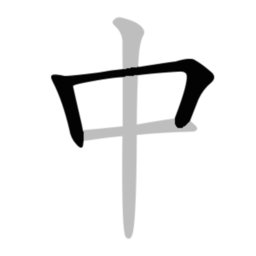
Knowing is not enough
An article can confirm the rule, but stable handwriting comes from checking the animation and practising the character in the app.
Related Reading
Chinese Stroke Order Rules: How to Remember the Basics
Users often search for the rule before they search for the character.
Read articleChinese Stroke Order Lookup (Bishun Lookup): Check Any Character Free Online
High-intent users usually want one thing: the correct way to write a character right now.
Read articleCommon Chinese Stroke Order Mistakes and How to Fix Them
The real problem is often not one character, but one repeated mistake pattern.
Read articleHow to Learn Chinese Stroke Order (Step by Step)
Learning stroke order is not about memorizing rules — it is about a short check-and-practice loop you repeat for every new character.
Read article