Quick Scan
- Everyday Chinese is written with characters, not with an alphabet. 汉字 / 漢字 is hàn zì. 中文 is zhōng wén.
- The system learners often call the “Chinese alphabet” is usually 汉语拼音 / 漢語拼音 (hàn yǔ pīn yīn), or simply 拼音 (pīn yīn). It is a pronunciation and typing tool, not a substitute for characters in ordinary writing.
- Teaching pinyin in this lesson is written with syllable spaces and tone marks: nǐ hǎo, zhōng wén, hàn zì. Tone numbers are not used in the learner-facing text.
- Ordinary Mandarin pinyin spellings use Latin letters plus ü. They do not use the letter v. On many keyboards, you type v only as a shortcut to enter ü.
- Mandarin syllables have four main tones and a neutral tone. The textbook set 妈/媽 mā, 麻 má, 马/馬 mǎ, 骂/罵 mà, 吗/嗎 ma shows why tone marks matter.
- In Taiwan, children often first learn pronunciation with 注音符号 / 注音符號 (zhù yīn fú hào), also called Zhuyin or Bopomofo (ㄅ ㄆ ㄇ ㄈ). It writes the same Standard Mandarin sounds with different symbols.
- Simplified and traditional characters are two sets of character forms, not two alphabets.
Everyday Chinese is written with characters, not an alphabet
An alphabet is a set of letters that stand mainly for sounds, which you then combine to spell words. English, Spanish, and many other languages work this way.
Everyday written Chinese does not. A newspaper sentence, a chat message, or a shop sign is written with characters. 中文 (zhōng wén) and 汉语 / 漢語 (hàn yǔ) are both everyday names you will see for the language; this lesson teaches Standard Mandarin and the characters used to write it. Each character is a written unit that readers recognize as a whole, such as 你, 好, 中, or 文. You cannot “spell 中文 with letters” the way you spell an English word.
That is the direct answer to “Does Chinese have an alphabet?” For ordinary writing: no. It has characters.
This does not mean Mandarin has no way to write sounds. It does — and that is usually what a “Chinese alphabet” search is really looking for.
What people usually mean: Hanyu Pinyin
汉语拼音 / 漢語拼音 (hàn yǔ pīn yīn), often shortened to 拼音 (pīn yīn), is the romanization most learners meet first. It uses Latin letters, plus ü, to show the pronunciation of Standard Mandarin syllables.
Pinyin is extremely useful:
- It tells you how to say a new character or a new phrase.
- It is the usual way to type Chinese on a phone or a computer: you type the pinyin, then choose the character.
- It appears in textbooks, dictionaries, and many beginner materials.
It is still not “how Chinese is written” in daily life. You may see pinyin on a learner flashcard, under a line of text in a primer, or in some names. A typical message still looks like 你好, not nǐ hǎo. If you only learn the letters and never the characters, you will be able to read teaching aids, but not ordinary Chinese text.
A practical way to keep the two layers straight is to treat pinyin as a map of the sounds, and characters as the writing you will actually read.
Letters, ü, and typing v
The pinyin you see in lessons is built from Latin letters. You already know the shapes; the values are not always the same as in English. For example, q, x, zh, and c need to be learned as Mandarin sounds, not as English ones. This lesson does not try to teach every initial and final. A pinyin chart is a pronunciation map, and it is worth studying later as its own skill.
Two spelling details are worth locking in now.
First, ü is a regular pinyin vowel, as in 女 nǚ. It is not the same as u. In some syllables the two dots are dropped in the official spelling after certain initials, but the sound can still be ü; beginners should learn each syllable from a reliable transcription rather than guessing from English.
Second, the letter v is not used in ordinary Mandarin pinyin spellings. You will not write nv as the finished pinyin for 女. On many keyboards, however, typists enter v as a shortcut to produce ü, so typing nv is a common way to get nü, then choose 女. The shortcut belongs to the keyboard; it is not a standard pinyin letter in the finished spelling.
Examples you can say and write today:
- 你好 nǐ hǎo — a complete everyday hello, already taught on this site’s hello lesson.
- 中文 zhōng wén — “Chinese” as a written language.
- 谢谢 / 謝謝 xiè xie — “thank you,” with a neutral tone on the second syllable, as in the thank-you lesson.
Write teaching pinyin with tone marks. The same letters without tones are incomplete for a learner, because mā, má, mǎ, mà, and ma are not the same syllable.
A short look at tones
Mandarin syllables have four main tones and a neutral tone. The classic textbook set uses the letters ma with five different tone patterns:
| Character | Teaching pinyin | Tone | Everyday meaning in this example |
|---|---|---|---|
| 妈 / 媽 | mā | 1st, high and level | mom |
| 麻 / 麻 | má | 2nd, rising | hemp |
| 马 / 馬 | mǎ | 3rd, falling-rising | horse |
| 骂 / 罵 | mà | 4th, falling | to scold |
| 吗 / 嗎 | ma | neutral | question particle |
These five are a demonstration, not a claim that Chinese has only five syllables. The point is smaller and more useful: if you remember only “ma” and forget the tone, you have not yet written the Mandarin syllable clearly.
A full set of tone-pair drills belongs in a later tones lesson. One reminder is enough here: learn the mark with the syllable, and say the examples aloud.
In 你好 (nǐ hǎo), both syllables are third tone in isolation. In connected speech, the first third tone is commonly taught as changing in a third-plus-third sequence. That sandhi is covered in the hello lesson; this page does not add a new rule.
Zhuyin, or Bopomofo, in Taiwan
In Taiwan, children often first learn to read Mandarin sounds with 注音符号 / 注音符號 (zhù yīn fú hào), also called 注音 (zhù yīn), Zhuyin, or Bopomofo. The nickname comes from the first four symbols: ㄅ ㄆ ㄇ ㄈ.
Zhuyin represents the same Standard Mandarin sounds as pinyin, but it does not use Latin letters. It is a phonetic script for learning and annotation, not a second system for writing ordinary Chinese sentences. Books, messages, and signs in Taiwan are still written in characters, usually in traditional form.
Pinyin is the romanization most widely used in international teaching and in many input methods. It also appears in some names and documents in Taiwan. If you are studying in a Taiwan classroom, you may meet Zhuyin first; if you are using most global beginner courses, you will probably meet pinyin first. Either can teach you the sounds. Neither replaces characters.
Simplified and traditional characters are not two alphabets
简体 / 繁體 differences are about the shape of characters, not about switching to an alphabet. 汉字 and 漢字 are the same word, hàn zì, in two official sets of forms. The same is true of 汉语拼音 / 漢語拼音, 注音符号 / 注音符號, and several of the tone examples: 妈/媽, 马/馬, 骂/罵, 吗/嗎. Some characters look the same in both sets, including 麻, 中文, 拼音, and 你好.
Choosing simplified or traditional is a later reading decision. It does not create a “simplified alphabet” or a “traditional alphabet.”
Other Sinitic languages, such as Cantonese, also use Chinese characters, and they have their own romanizations. Those systems are useful in their own courses; they are not a different “Chinese alphabet” to memorize on this page.
How to start
You can use this distinction immediately.
- Pick the phonetic system your course already uses. For most international beginners, that is pinyin. In many Taiwan schools, it is Zhuyin. Learn to read the marks, including tones.
- Practice with short, real phrases you will actually say, such as 你好 nǐ hǎo and 谢谢 xiè xie, rather than with an isolated list of letters.
- Start learning characters at the same time, beginning with very common ones. The characters in the hello lesson and in the numbers lesson are a sensible first set.
- When you type, enter the pinyin (or use the input method you are taught), then choose the character. The letters you type are a path to the character, not the finished word on the page.
- Use a pinyin chart as a pronunciation map when you need to check a sound. Do not treat the chart as a replacement alphabet for written Chinese.
If you came here hoping to memorize “the Chinese alphabet” in one afternoon, the useful outcome is narrower and more honest: you now know what to study instead, and you can start saying and typing a few syllables correctly.
Practice
Read each item, then check the key.
- In everyday writing, does Chinese use an alphabet? What does it use? Write 汉字 in simplified and traditional characters, with teaching pinyin.
- What do learners usually mean by the “Chinese alphabet”? Write 汉语拼音 in simplified and traditional characters, with teaching pinyin.
- In ordinary Mandarin pinyin spelling, is v a regular letter? How is the ü sound typed on many keyboards?
- Write the five textbook syllables 妈, 麻, 马, 骂, 吗 in simplified and traditional characters, with teaching pinyin, and say which one is the neutral tone.
- What phonetic system is commonly used in Taiwan schools to teach Mandarin pronunciation? Write 注音符号 in simplified and traditional characters, with teaching pinyin.
Suggested answers:
- No. It uses Chinese characters. 汉字 / 漢字;hàn zì
- Hanyu Pinyin, a romanization for Mandarin, not a replacement for characters. 汉语拼音 / 漢語拼音;hàn yǔ pīn yīn
- v is not used in ordinary Mandarin pinyin spellings; many keyboards use v to type ü.
- 妈/媽 mā;麻/麻 má;马/馬 mǎ;骂/罵 mà;吗/嗎 ma. The neutral tone is 吗 / 嗎 ma.
- 注音符号 / 注音符號;zhù yīn fú hào (Zhuyin / Bopomofo)
If an item felt uncertain, go back to the matching section and say the examples aloud, including the tone marks, not only the letters.
References
These pages were used to check pronunciation and usage.
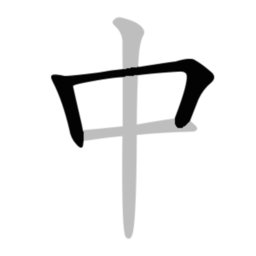
Knowing is not enough
An article can confirm the rule, but stable handwriting comes from checking the animation and practising the character in the app.
FAQ
- So is pinyin the Chinese alphabet?
- Pinyin is an alphabetic romanization of Standard Mandarin. It is the thing most people are looking for when they type “Chinese alphabet.” It is still not the writing system used in everyday Chinese text. Ordinary writing uses characters.
- Do I have to learn characters if I already know pinyin?
- If your goal is to read real Chinese — messages, menus, websites, books — yes, you need characters. Pinyin helps you pronounce and type them. It does not replace them.
- Should I learn Zhuyin instead of pinyin?
- Learn the system your course or classroom uses. Zhuyin is common in Taiwan schools; pinyin is the romanization most international beginners meet first. Both describe the same Standard Mandarin sounds. You do not have to learn both before you can start.
- Are simplified and traditional Chinese two different alphabets?
- No. They are two sets of character forms. 汉字 and 漢字 are the same word, written in simplified and traditional shapes.
- How many Chinese characters are there?
- Everyday reading uses thousands of characters, and dictionaries list many more. There is no single official total that you need in order to start. Begin with common characters and a phonetic system, not with a complete count.
Related Reading
Chinese Numbers: How to Count from 0 to 100, and When to Use 二 and 两
Mandarin numbers are regular once you know 0 to 10. This lesson shows how those digits combine up to 100, why 101 needs 零 (líng), and when 2 is 二 (èr) or 两 (liǎng).
Read articleYong Stroke Order: Why This Character Matters
Yong is one of the most searched single characters in stroke order learning.
Read articleRen Stroke Order: Why Learners Reverse It
Simple characters are often the easiest ones to get wrong.
Read articleKou Stroke Order: The Difference Between the Character and the Component
Kou is simple on the surface, but it appears everywhere as a component.
Read article